Plan a garden wedding by solving shelter, access, guest comfort, and event logistics before choosing flowers. Once those foundations are clear, use the garden's existing shapes and colors to guide a restrained design. A romantic setting becomes enjoyable when guests can hear the ceremony, find their seats, and move comfortably through the day.
This guide is a planning framework rather than a substitute for your venue's rules or local requirements. Ask the venue and suppliers to confirm permissions, installation limits, and weather arrangements in writing. Outdoor spaces can be beautiful and operationally demanding at the same time.
Read the site before designing it
Visit at a time close to your intended ceremony hour if practical. Look for harsh sun, shaded areas, wind exposure, uneven paths, and nearby noise. Take photographs from the ceremony position and from the last row of seats. The backdrop behind the couple matters, but so does the experience of the people watching.
Sketch the arrival route, ceremony space, drinks area, toilets, dining space, and departure point. Note the distance between each. Ask where catering teams work and how deliveries enter. Separating service movement from guest movement can prevent a lovely lawn from becoming a confusing crossing point.
Discuss accessibility directly with the venue rather than describing a route as accessible based on appearance. Ask about firm surfaces, step-free options, seating, toilet access, and transport between areas. Invite guests to share access needs privately through your chosen RSVP process.
Make the weather plan a real second layout
A useful rain plan names a location, decision time, responsible person, and setup sequence. “We will use a tent” is incomplete if the tent is not reserved, the ground cannot accept stakes, or installation needs more notice than the forecast provides. Confirm what is included and what triggers extra charges.
Design the covered version with the same care as the outdoor version. Check capacity with tables and service space in place, not just standing occupancy. Ask about floor protection, ventilation, heating or cooling options, and the venue's procedures for severe weather. Follow professional instructions when conditions become unsafe.
Prepare for heat and wind as well as rain. Shade, drinking water, and a shorter exposed ceremony can help guest comfort. Lightweight paper, tall arrangements, and unstable signs need special attention. Choose practical fixes before adding more decorative objects.
Set priorities for the budget
Choose two or three experiences to protect. You might prioritize a comfortable meal, clear ceremony sound, and photographs in the garden. Fund essential infrastructure before allocating money to additional florals. A second bouquet arrangement cannot compensate for a reception layout that becomes unusable in rain.
Request itemized quotes that distinguish rental, delivery, labor, installation, collection, and damage terms. Outdoor events may involve separate charges for power, flooring, shelter, or transport. Keep a contingency line and make clear who may authorize spending during the final setup.
Build the palette from the setting
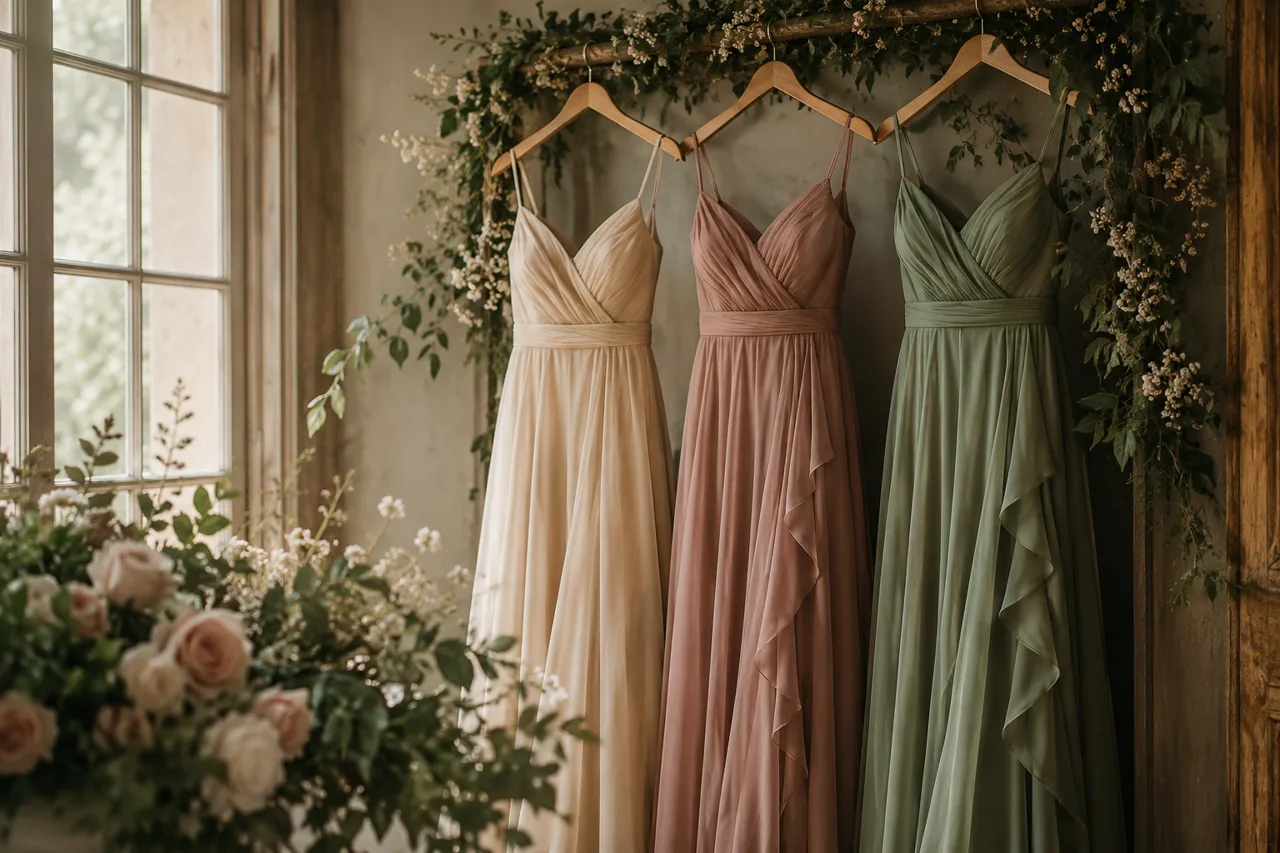
Start with the garden's strongest existing color. If the borders are full of warm roses, ivory linens and soft green details may be enough. If the space is mostly foliage, a muted rose or pale blue accent can add definition. Limit the number of competing decorative themes.
Use our vintage wedding color palettes to compare gentle combinations. Collect actual fabric and paper samples where possible. Digital inspiration images often have color grading that will not match real materials in your garden's light.
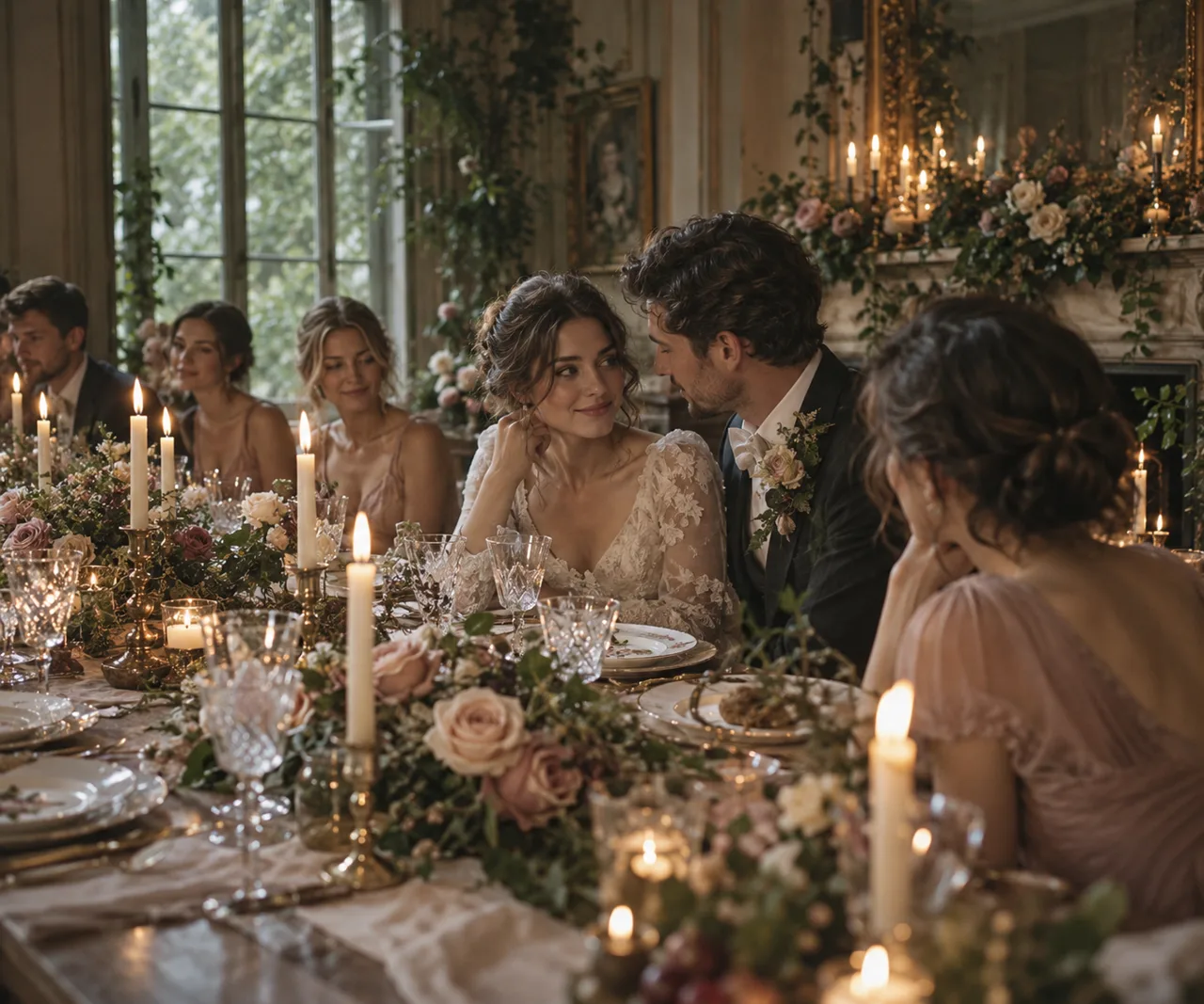
Place decoration where people naturally pause: the ceremony entrance, dining tables, and a clearly marked seating display. Keep pathways open and avoid arranging flowers where they obstruct conversation or views. Reuse ceremony pieces only after agreeing who will move them and when.
Plan a ceremony guests can follow
Ask the officiant and sound supplier how speech will reach the back row. Test equipment in the actual location if the venue permits it. Natural settings can include traffic, fountains, and wind noise that are easy to overlook during a quiet tour.
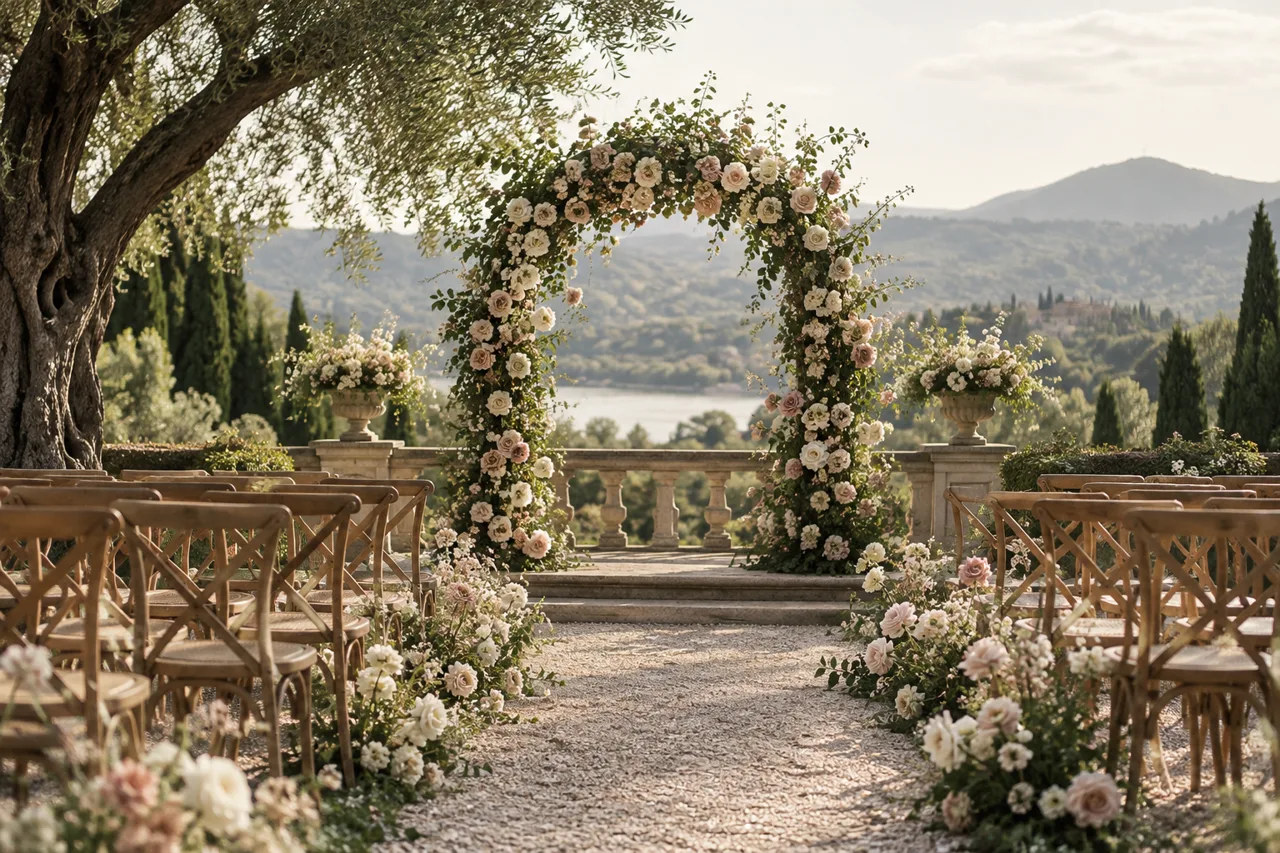
Position chairs with sightlines and walking space in mind. Reserve seating for people who need a shorter route. Provide clear directions from arrival to the ceremony so guests do not wander into service areas. If there is a long pause before dinner, make seating available during that interval too.
Create a handover that suppliers can use
A shared event sheet should show contact names, arrival times, layout drawings, power locations, and the weather decision process. Give each supplier the information relevant to their work. Keep a printed copy with the person coordinating the day in case mobile reception is poor.
Assign responsibility for personal items, cards, leftover decor, and rental returns. Couples often plan the arrival carefully and leave the exit vague. Check when amplified sound must finish, when guests need to depart, and when the site must be cleared. Those conditions should shape the final schedule.
Garden wedding planning checklist
- Confirm shelter availability and the weather decision deadline.
- Map guest routes, service routes, toilets, and seating.
- Ask about accessibility and communicate specific arrangements.
- Confirm power, sound, lighting, and supplier access.
- Approve a design that suits the existing planting.
- Check installation restrictions and collection times.
- Give one coordinator the final layout and contact sheet.
For a smaller decoration budget, read our vintage wedding budgeting guide. The same principle applies outdoors: reduce the number of decorative ideas before compromising the practical arrangements that let everyone enjoy them.
A successful garden celebration feels connected to its surroundings without asking guests to manage the environment themselves. Plan the practical layers first, let flowers and light supply much of the atmosphere, and keep both versions of the day—outdoors and sheltered—worthy of the occasion.